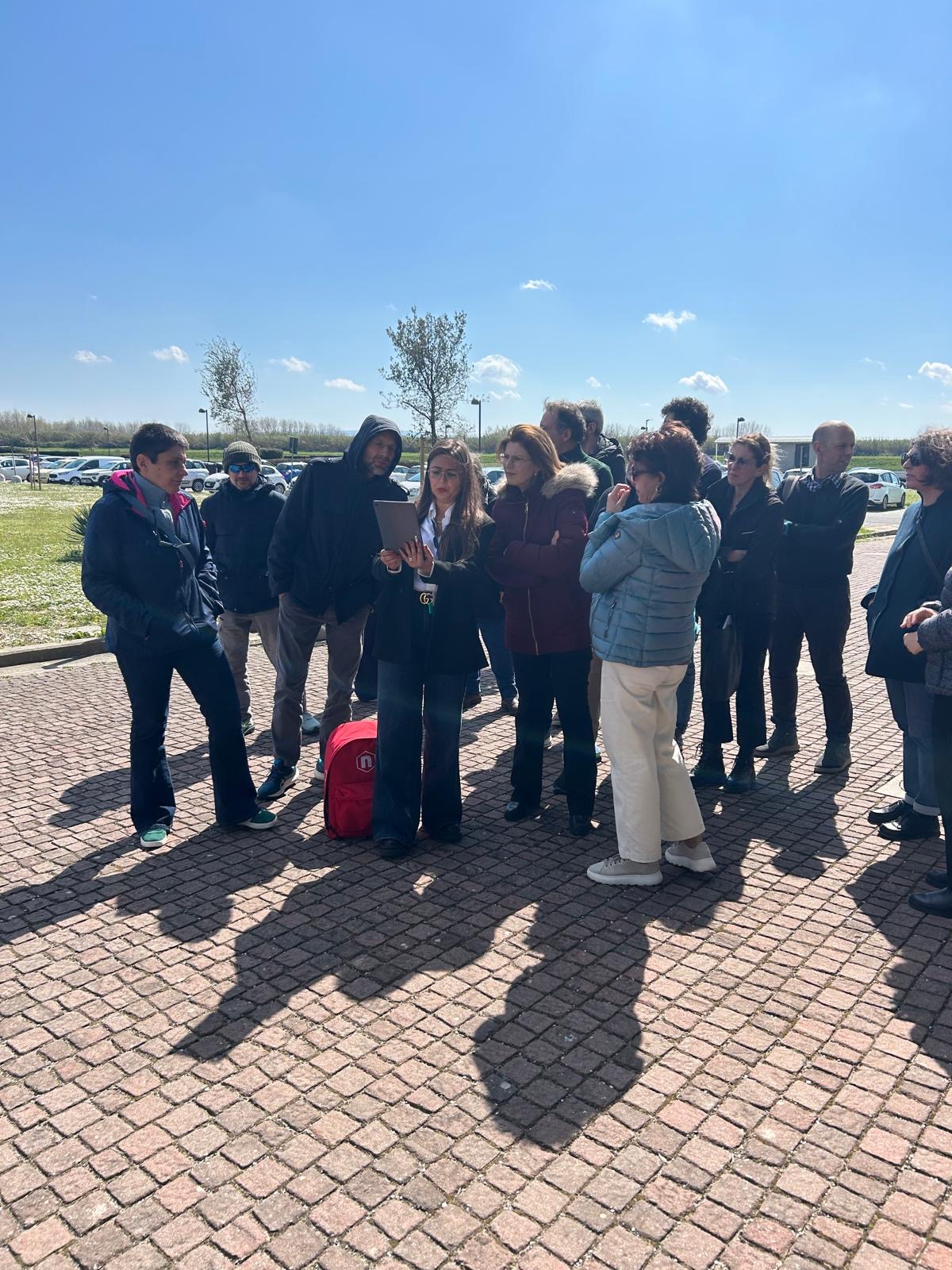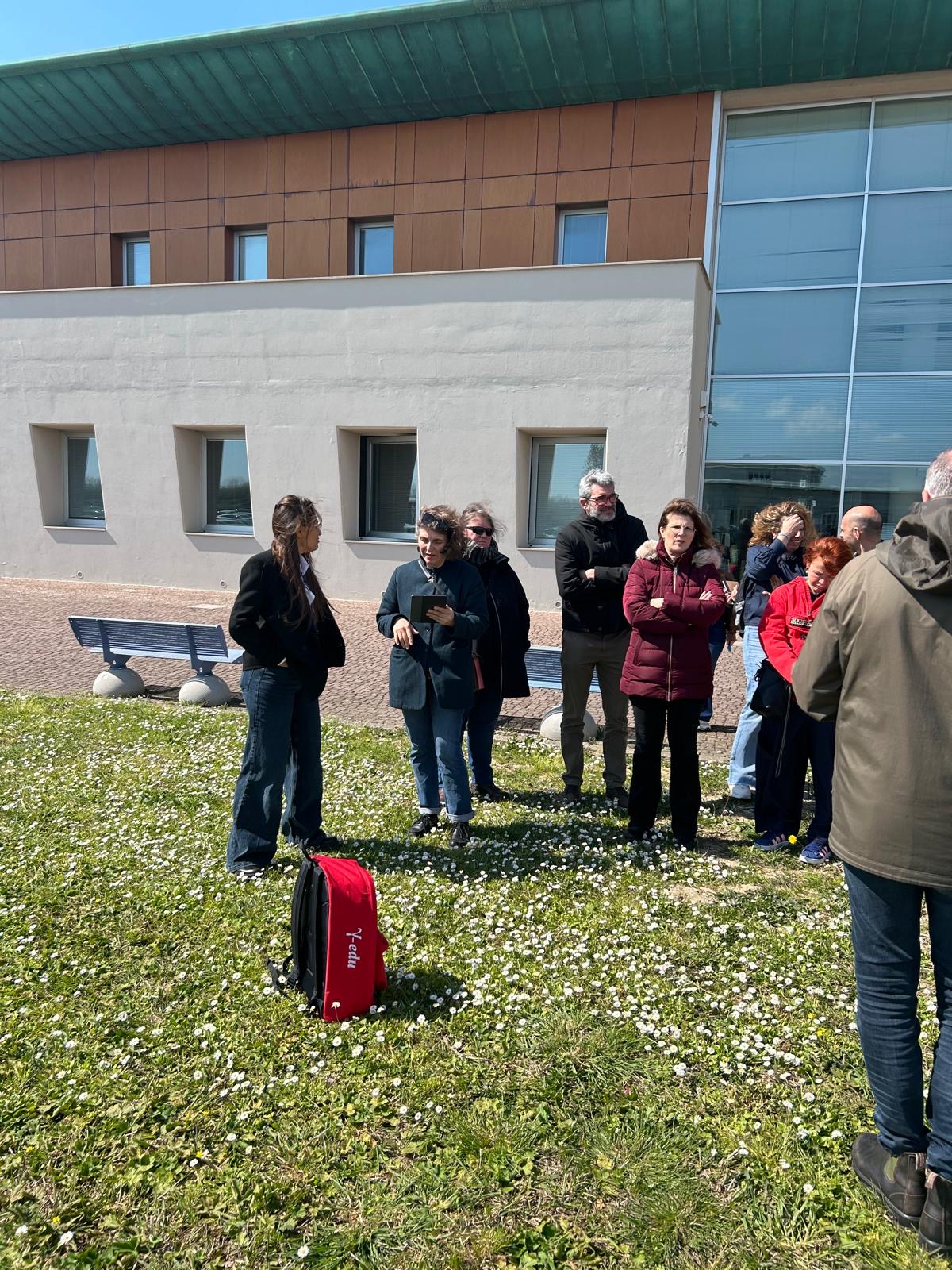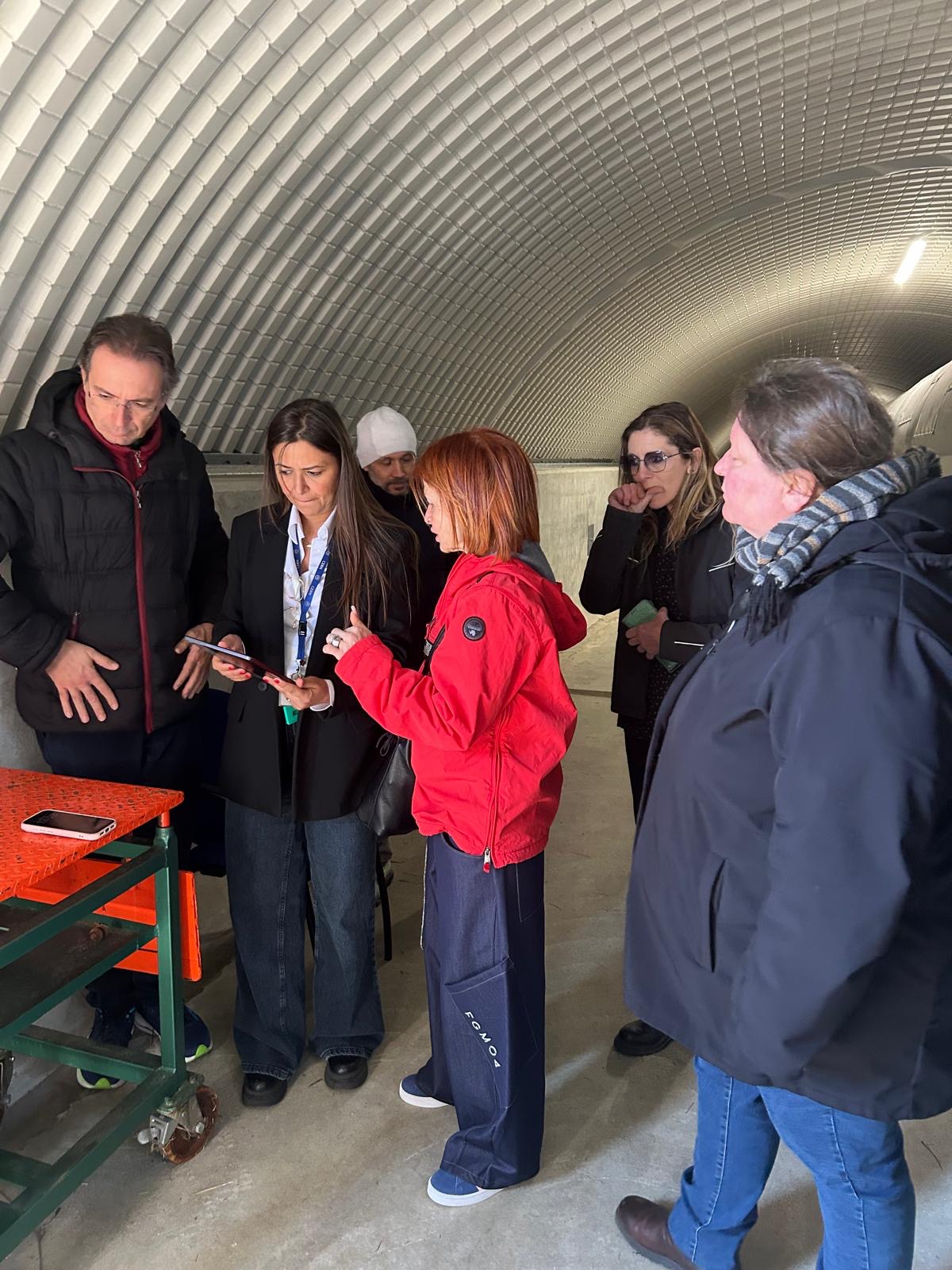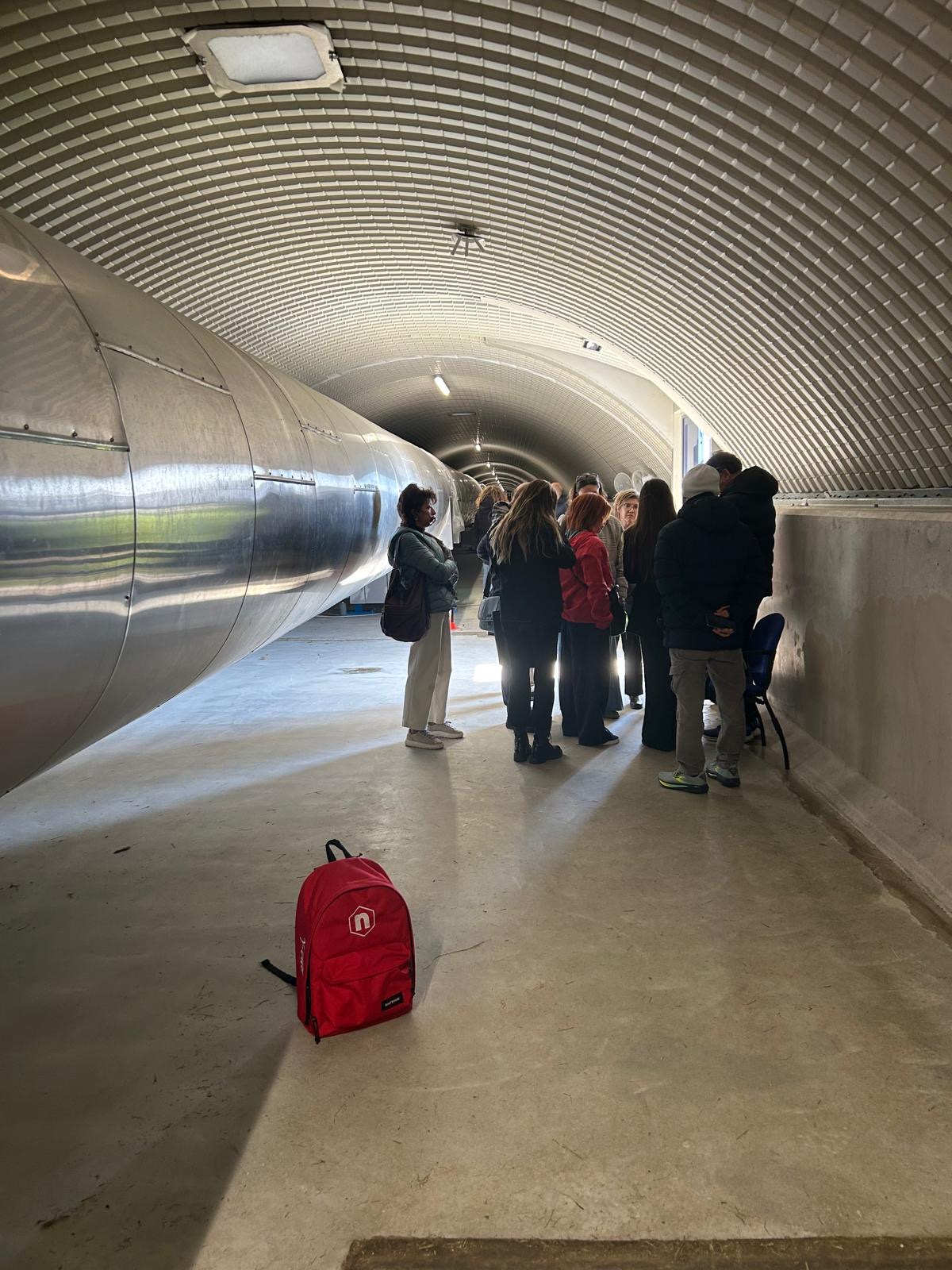
CAEN SpA participated in the recent PID workshop at the EGO‑Virgo laboratories, showcasing how the GammaEDU, a CAEN educational system, can be used for on‑site environmental radioactivity measurements. Throughout the event, the emphasis was placed on demonstrating how compact gamma‑ray spectroscopy tools can support real‑world scientific investigations.
The session included a live demonstration followed by a series of experimental measurements conducted together with participants.
Participants carried out a series of field measurements using the GammaEDU system in different environments within the EGO‑Virgo site. The goal was to analyze how gamma‑ray activity varies with location and material composition, using quantitative data to understand natural radiation sources.
The practical activities allowed attendees to explore:
- Real-time gamma-ray detection and spectrum acquisition
- Identification of common radioactive isotopes
- Basic calibration procedures
- Understanding detector response and measurement uncertainties
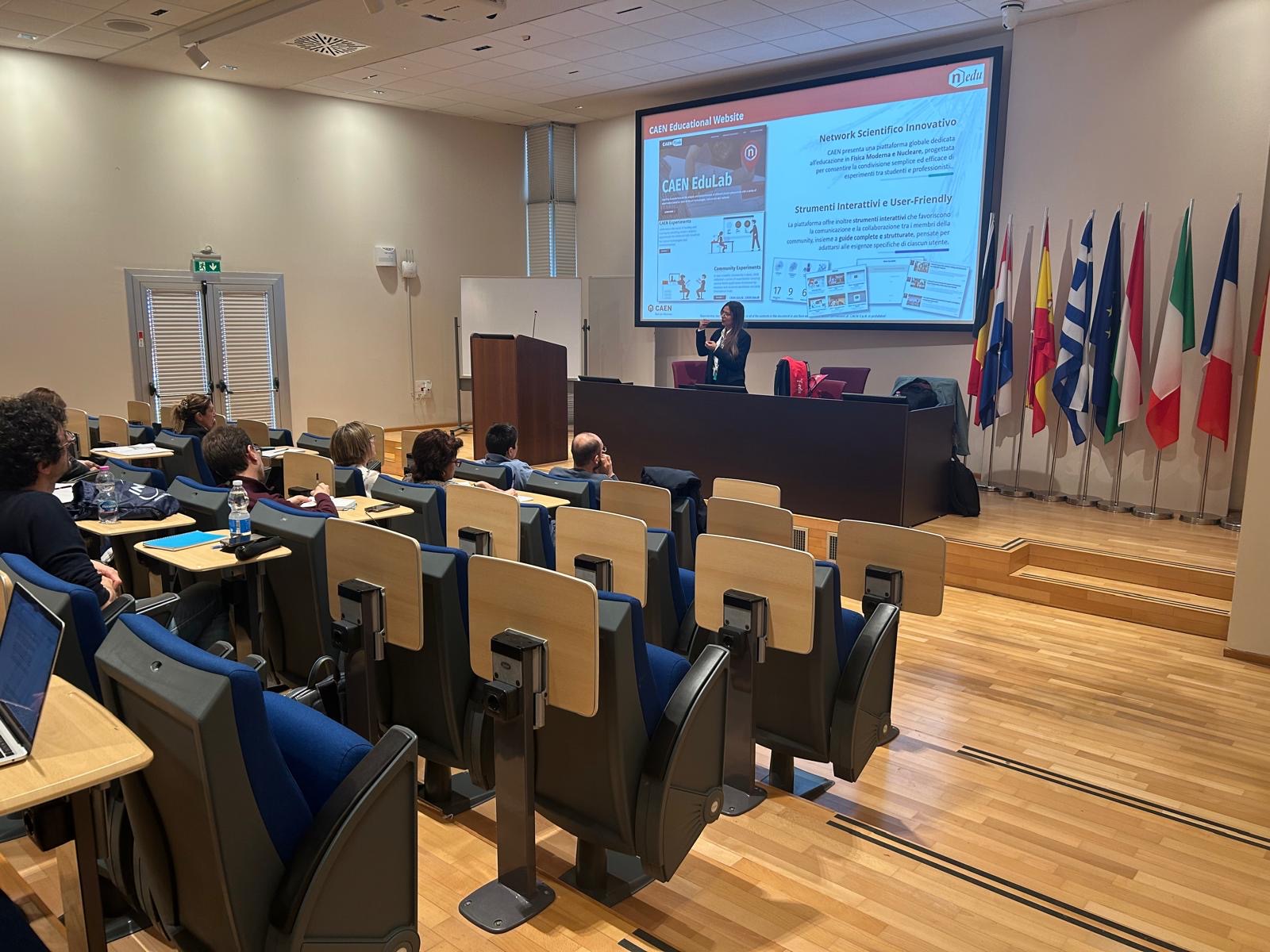
The dynamic environment of the EGO-Virgo laboratories (home to one of Europe’s major gravitational wave research infrastructures!) provided an exceptional backdrop for engaging high school educators with modern nuclear instrumentation and data analysis techniques. Two example measurements are highlighted below:
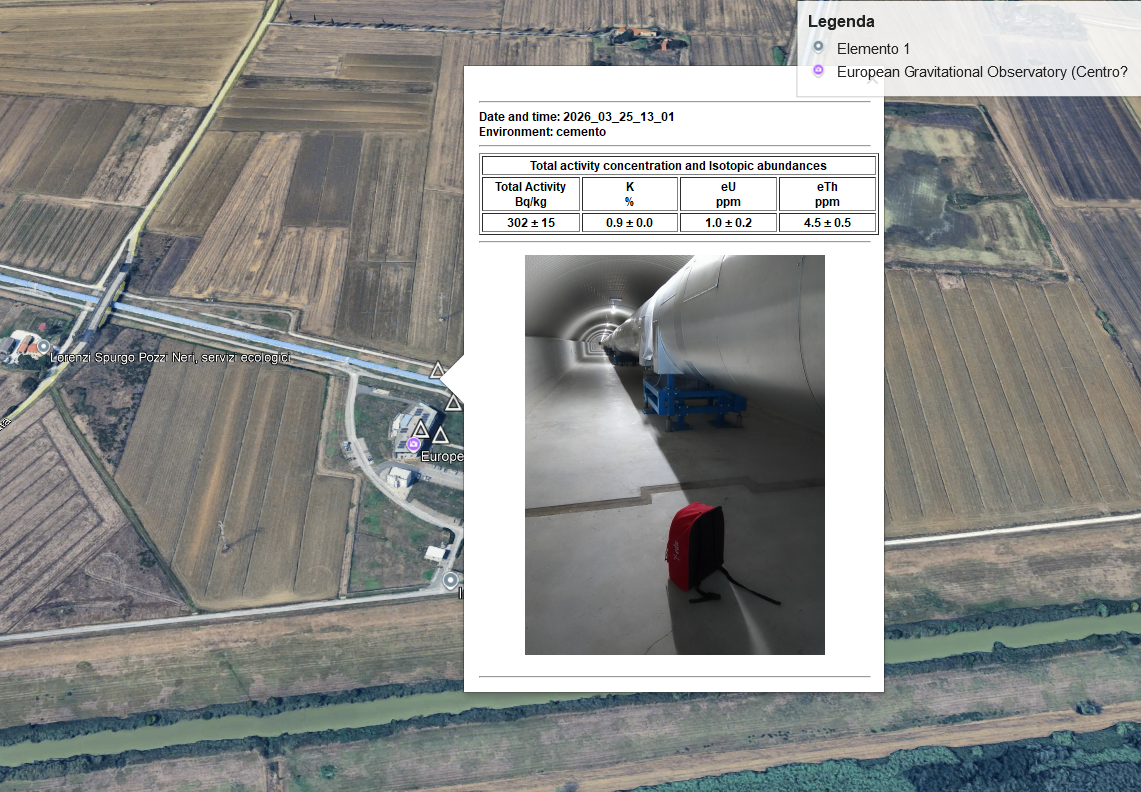
Measurement in an Indoor Concrete Environment
- Total activity: 302 ± 15 Bq/kg
Isotopic contributions:
- K‑40: 0.9 ± 0.0 %
- U (eU): 1.0 ± 0.2 ppm
- Th (eTh): 4.5 ± 0.5 ppm
This dataset illustrates how concrete structures typically show measurable contributions from uranium and thorium decay chains, due to the presence of natural radioisotopes in building materials.
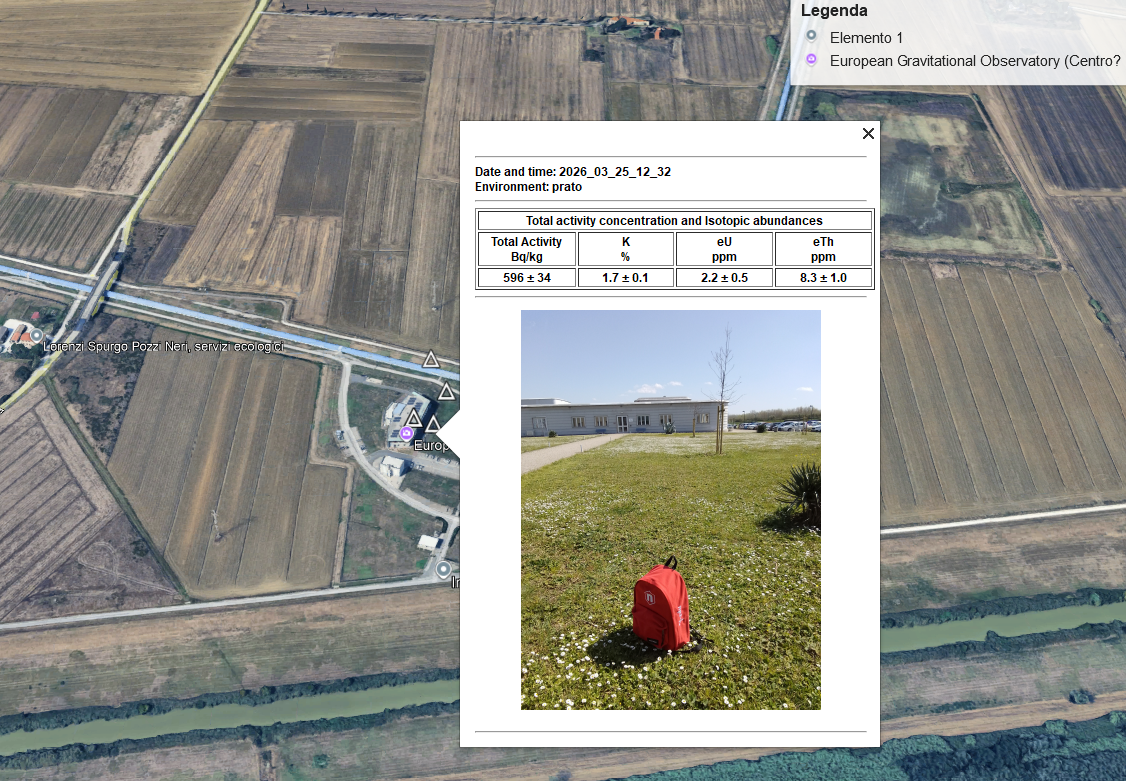
Measurement in an Outdoor Grass Environment
- Total activity: 596 ± 34 Bq/kg
Isotopic contributions:
- K‑40: 1.7 ± 0.1 %
- U (eU): 2.2 ± 0.5 ppm
- Th (eTh): 8.3 ± 1.0 ppm
Outdoor measurements revealed higher overall activity, driven by soil composition and natural radionuclides present in the ground. This comparison highlights the strong dependence of gamma‑ray background on environmental conditions.