In 1905, Albert Einstein published in Annalen der Physik what would become the most famous equation in the history of science: E=mc². It was a theoretical revolution, establishing the equivalence between mass and energy. What Einstein could not have imagined is that, more than a century later, the same equation would be at the heart of Positron Emission Tomography (PET), one of the most powerful diagnostic imaging techniques in the world, essential for the early diagnosis of cancer and many other diseases.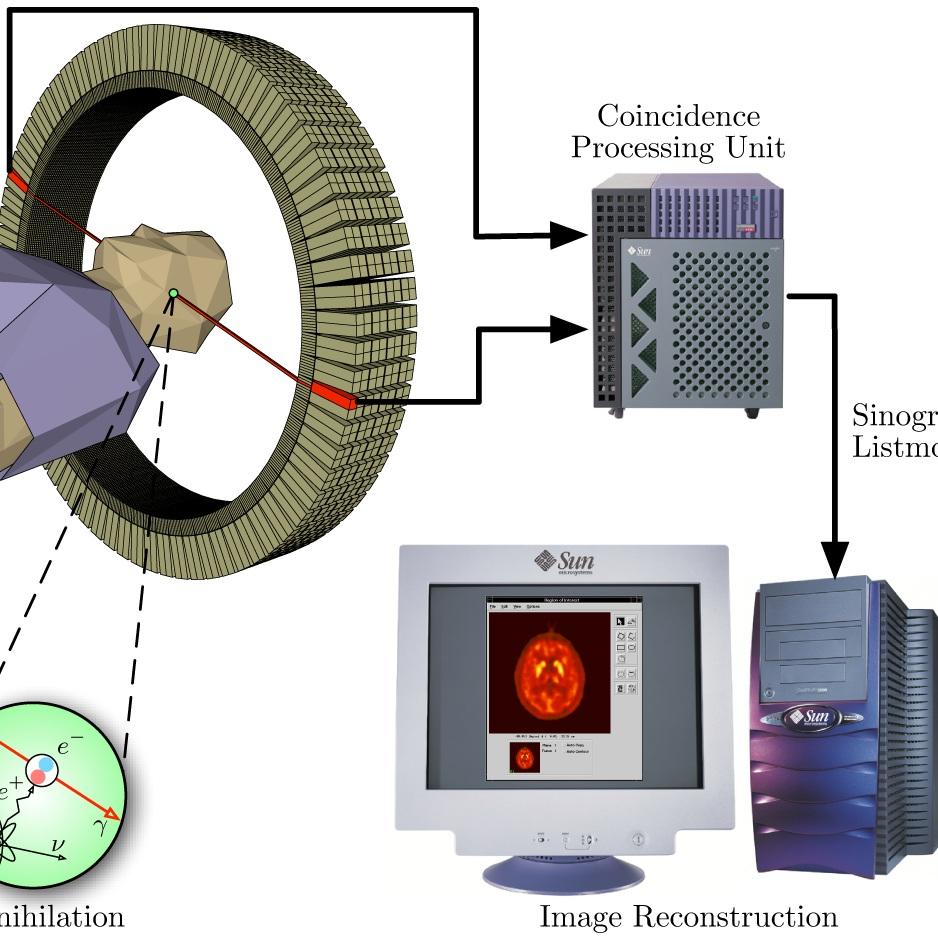
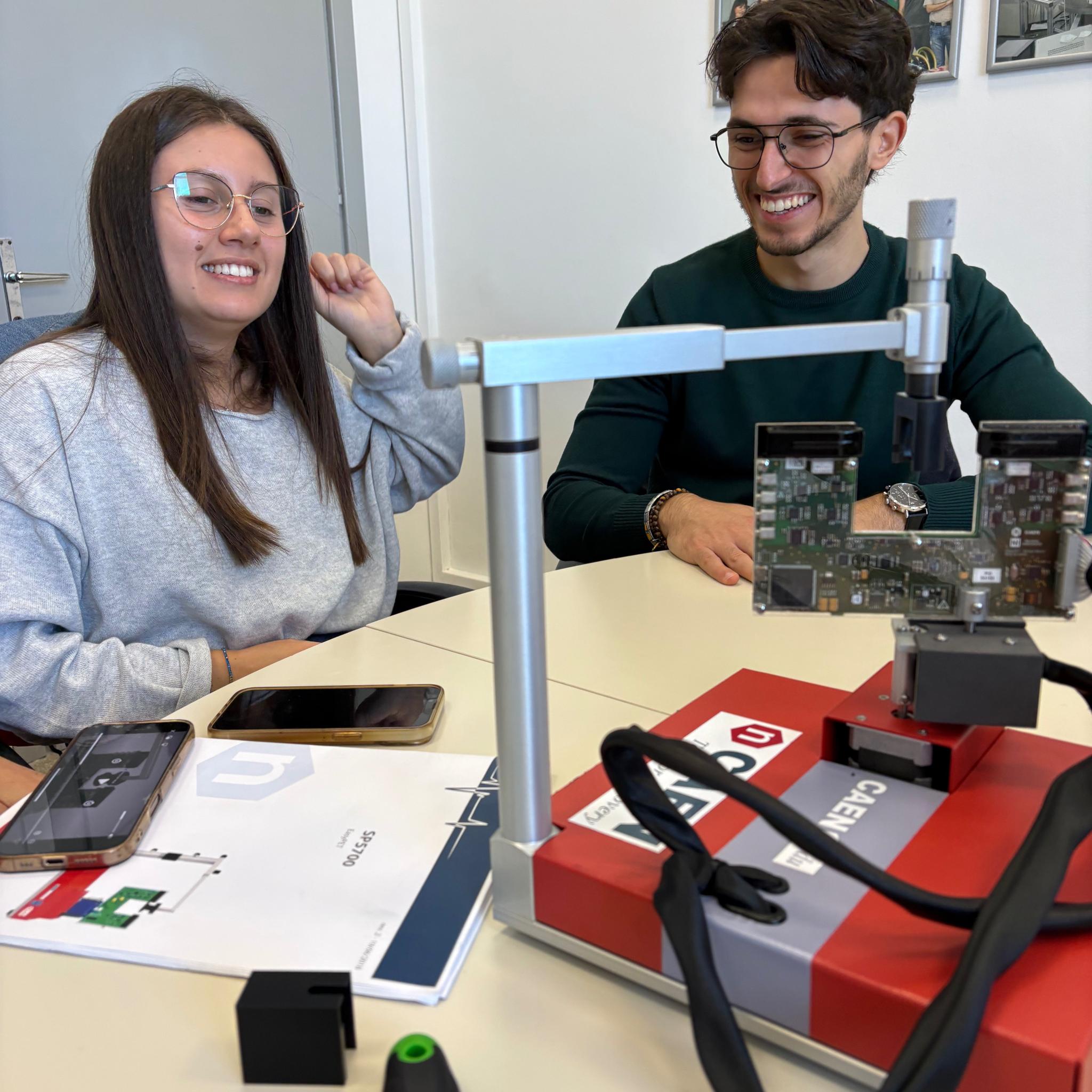
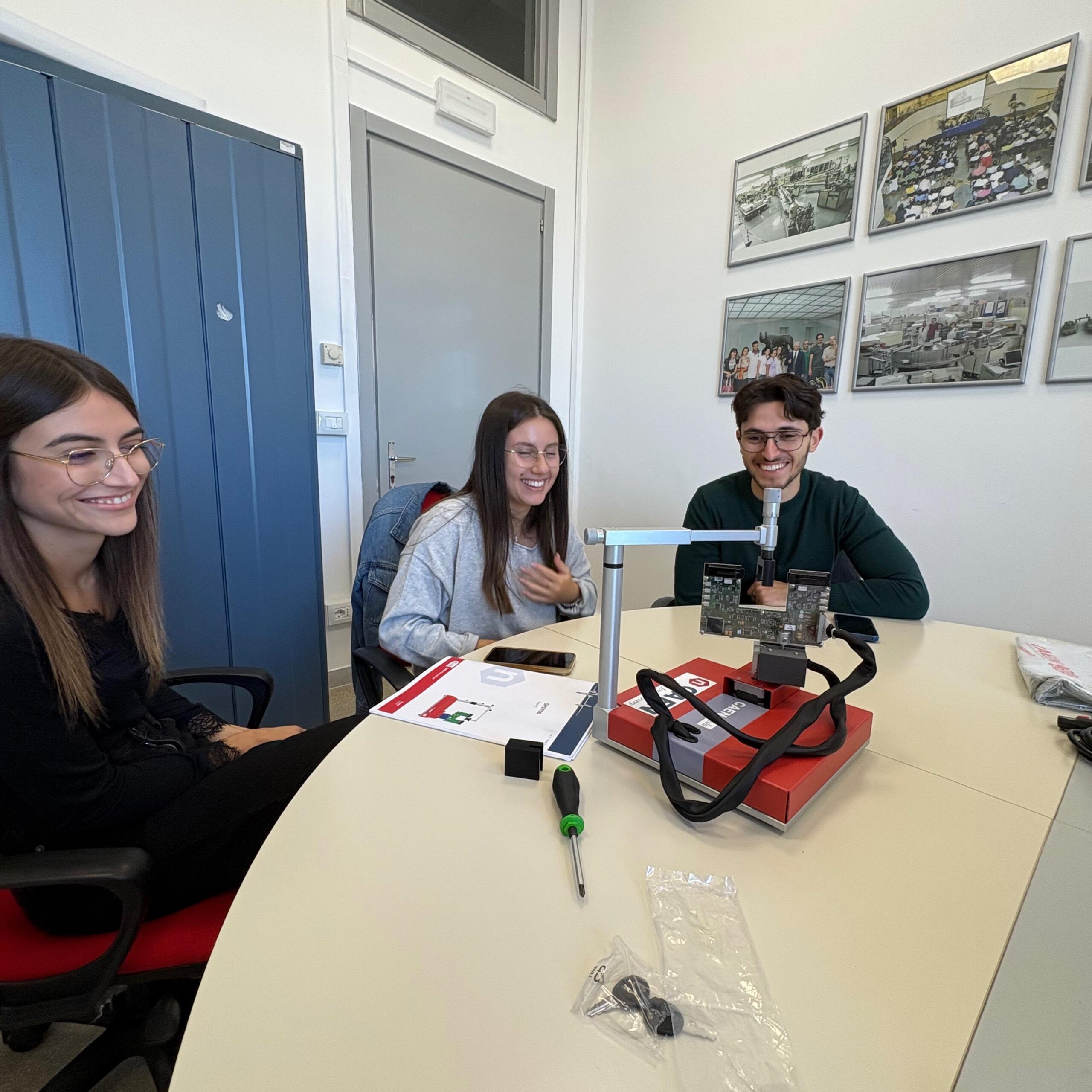
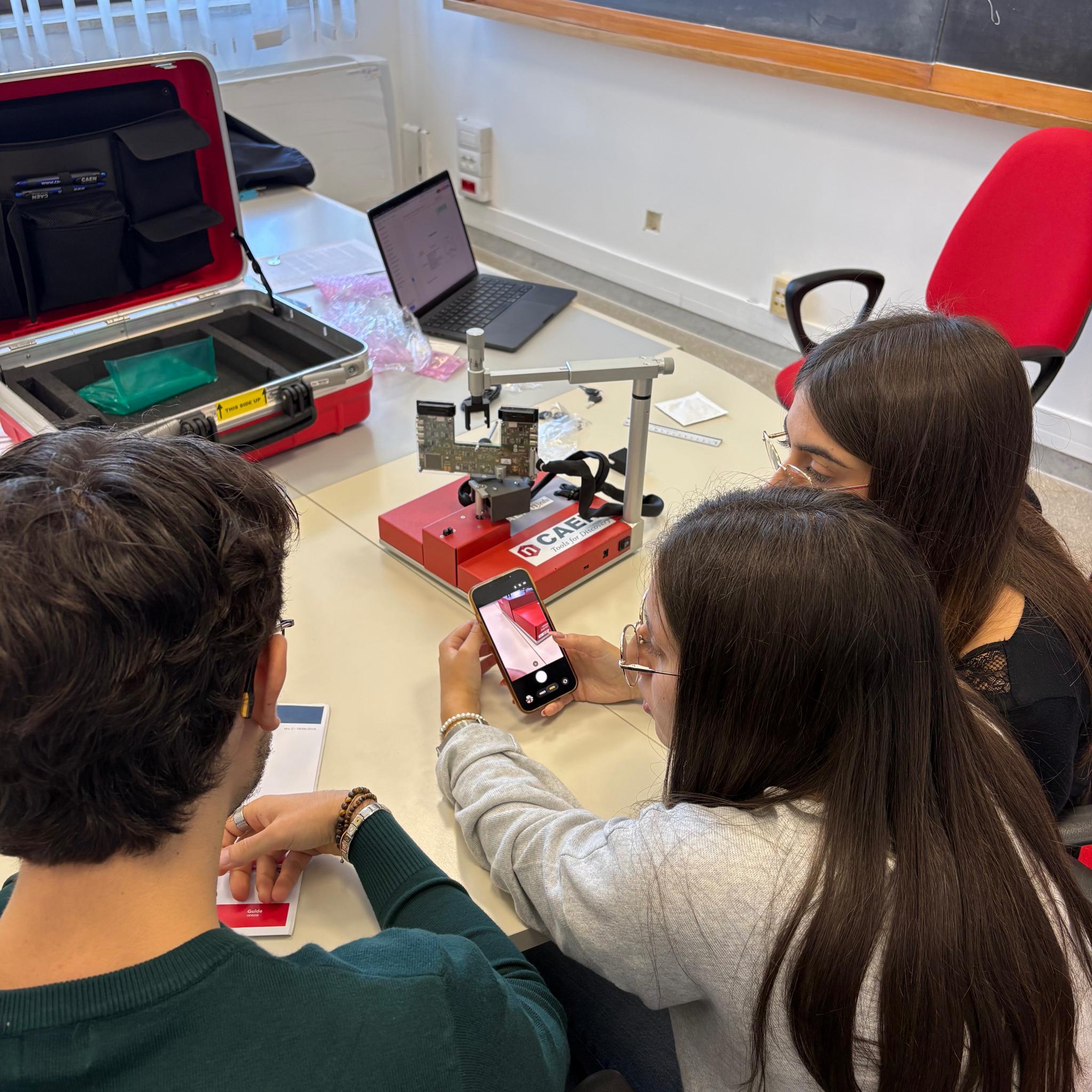
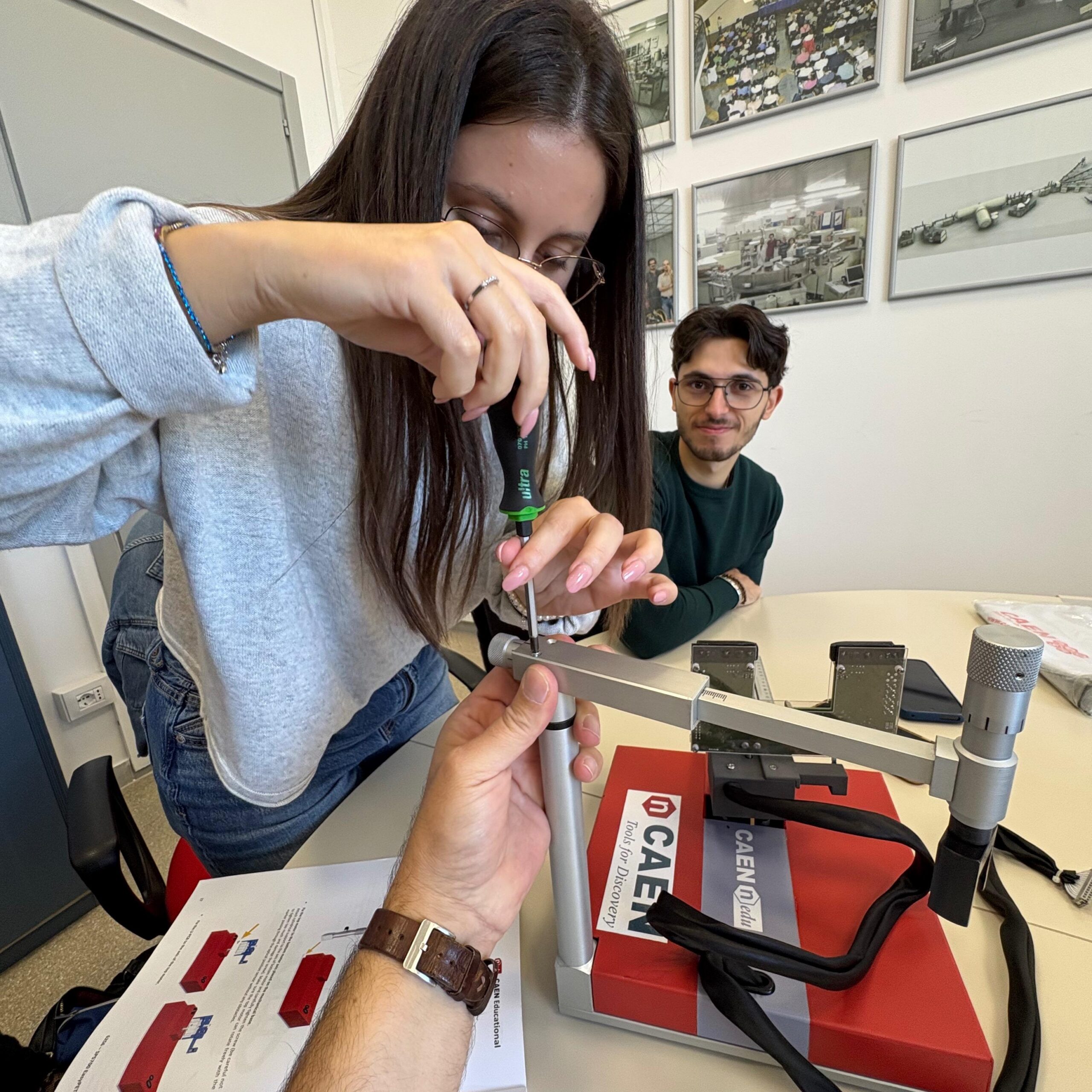
At the Department of Mathematics and Physics of the University of Salento, this theory comes to life. Students of the Medical Physics degree programme had the opportunity to install and test a miniaturised, fully functional PET system by CAEN. Working directly on the setup, they explored the physics behind the technique: when a positron meets an electron, their mass is converted into energy in the form of two 511 keV gamma photons emitted in opposite directions, and it is precisely the coincident detection of these photons that allows PET images to be reconstructed. A direct path from fundamental physics to technologies that save lives.
The hands-on programme continued at the Ionizing Radiation Laboratory, where Prof. Gianluca Quarta guided the students through a second experimental activity: measuring the levels of gamma radioactivity in a soil sample, using both laboratory and portable instrumentation. The experience allowed students to deepen their understanding of environmental monitoring techniques, the principles of radiation protection, and the many applications of medical physics.
Activities like these show how the right instrumentation can turn a classroom concept into a real experiment, helping students build the practical skills they will need in research, healthcare, and industry.
Curious to discover the world of physics and its applications up close? The University of Salento will host its Open Days at the Ecotekne Science Campus, where prospective students can learn about the bachelor’s and master’s degree programmes of the Department of Mathematics and Physics, meet faculty and students, and explore the study, research, and experimental opportunities on offer.
This collaboration is part of CAEN’s ongoing commitment to supporting science education and helping train the next generation of physicists, bringing professional-grade instrumentation into university teaching laboratories.