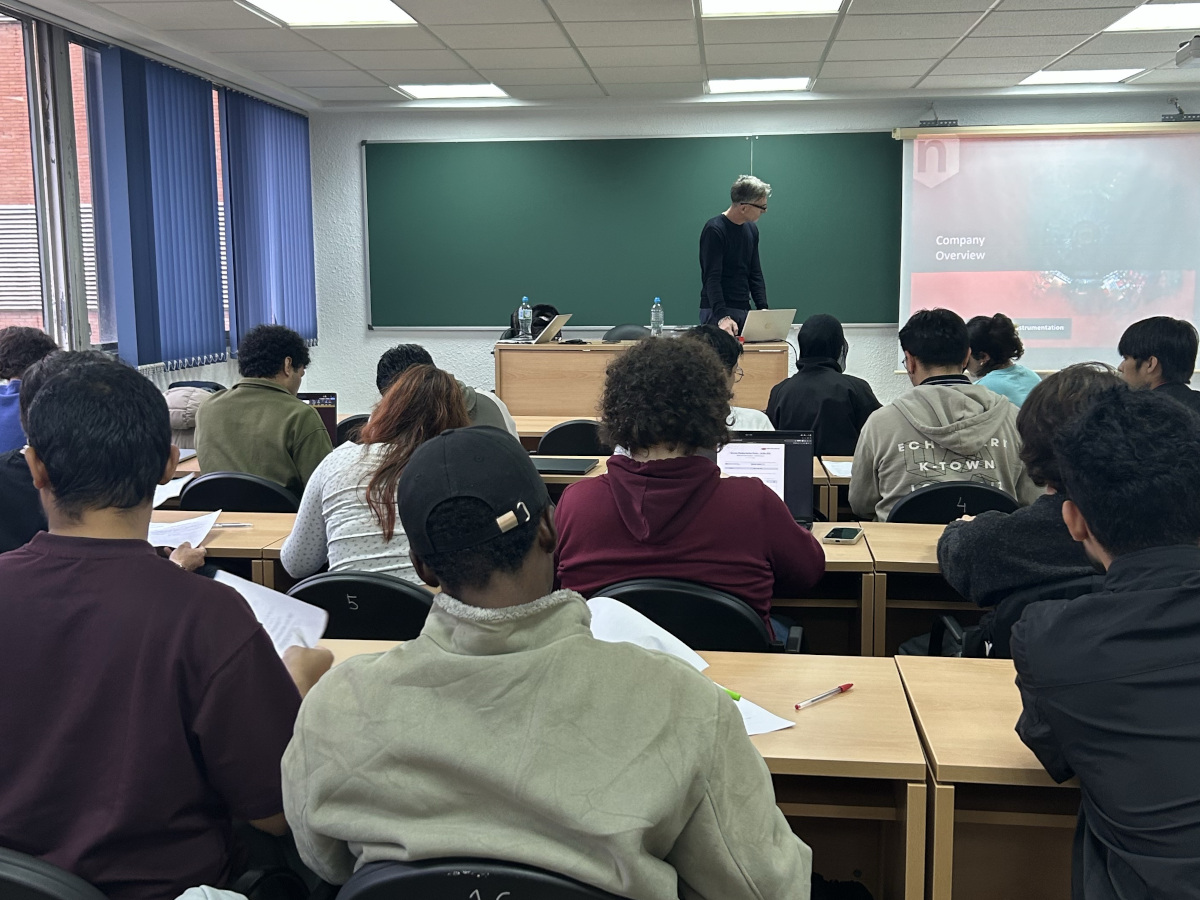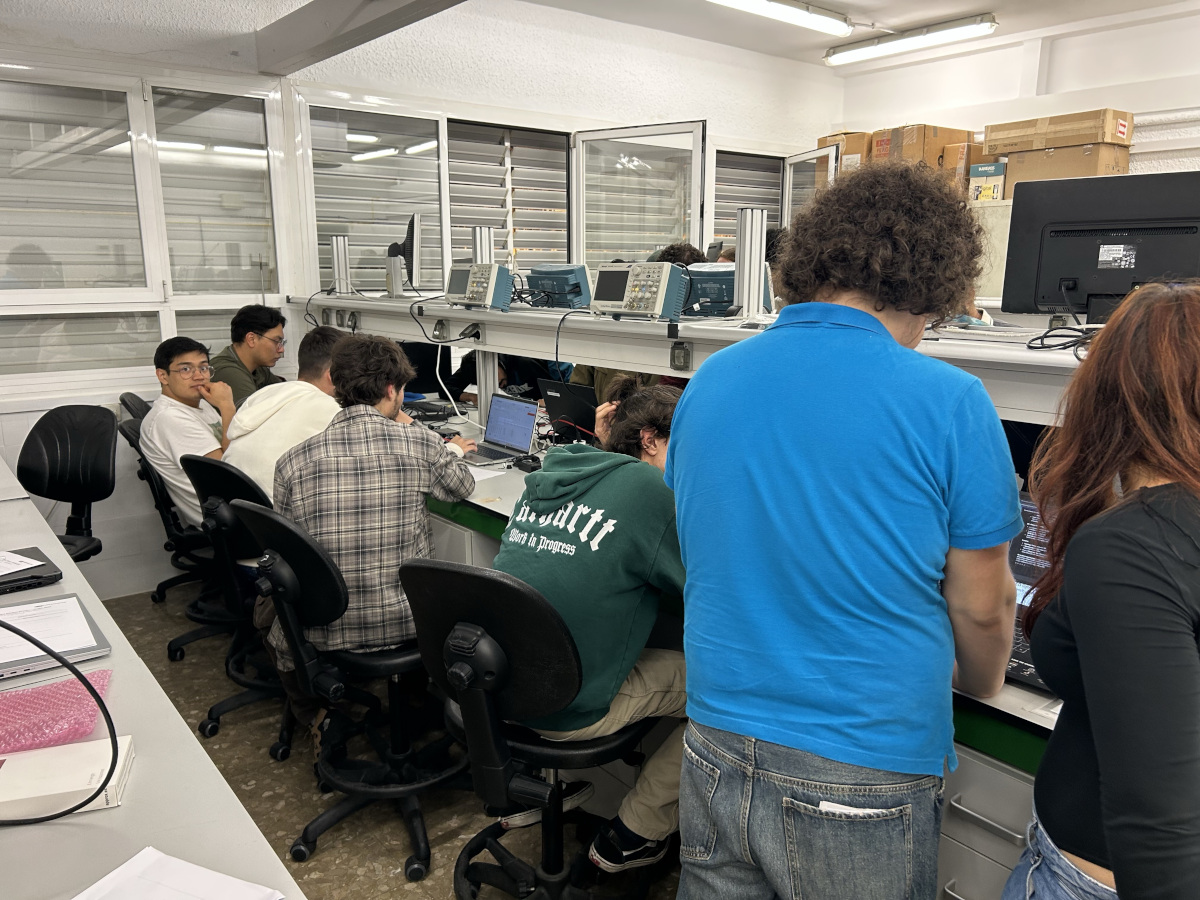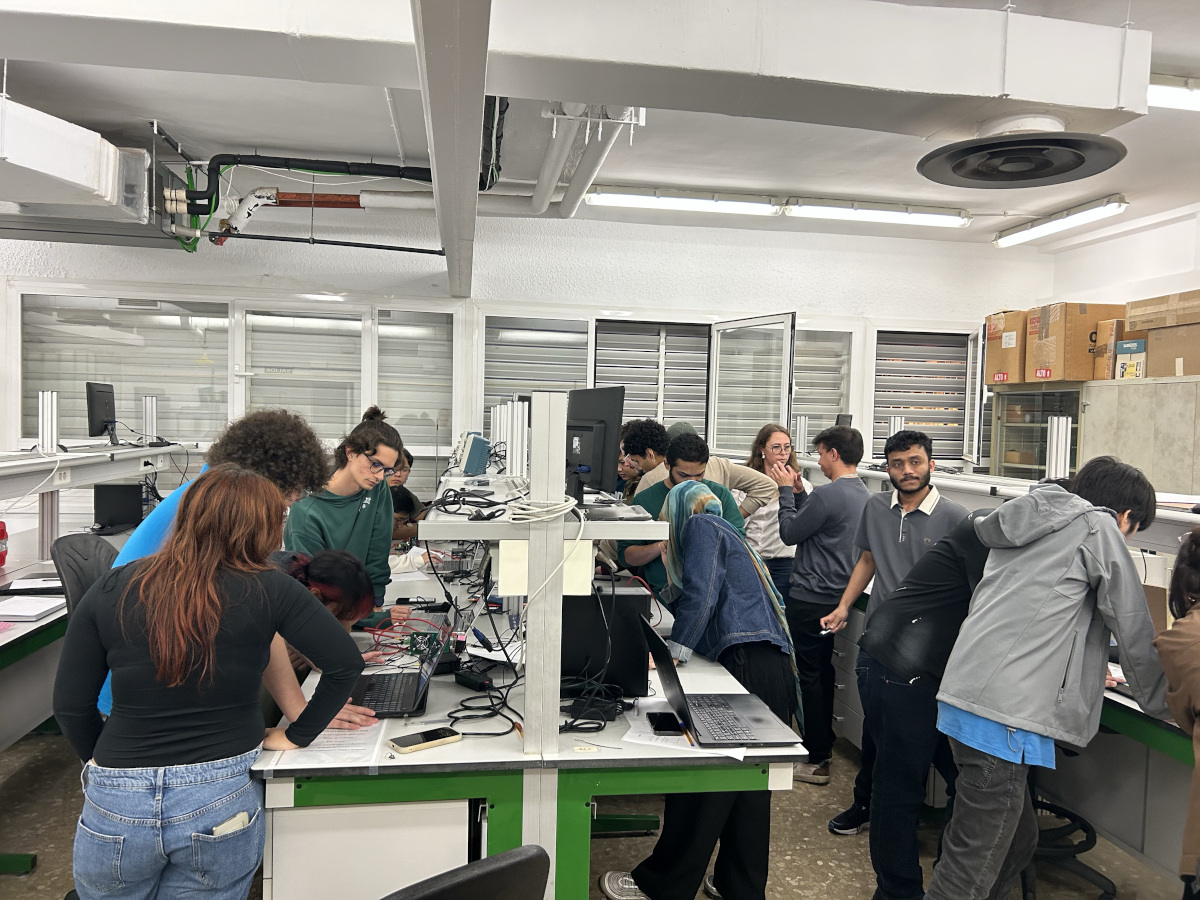
For the fourth consecutive year, CAEN has renewed its collaboration with the Erasmus Mundus Joint Master in Nuclear Physics (EMJMD NP). From November 16th to 19th, 2026, the CAEN team returned to the University of Seville for its annual visit to the Department of Applied Physics, with dedicated sessions for students held on November 17th and 18th.
After last year’s focus on digital gamma spectroscopy, the 2026 program moved to a new topic: Silicon Photomultipliers (SiPMs) and the electronics needed to read them out.
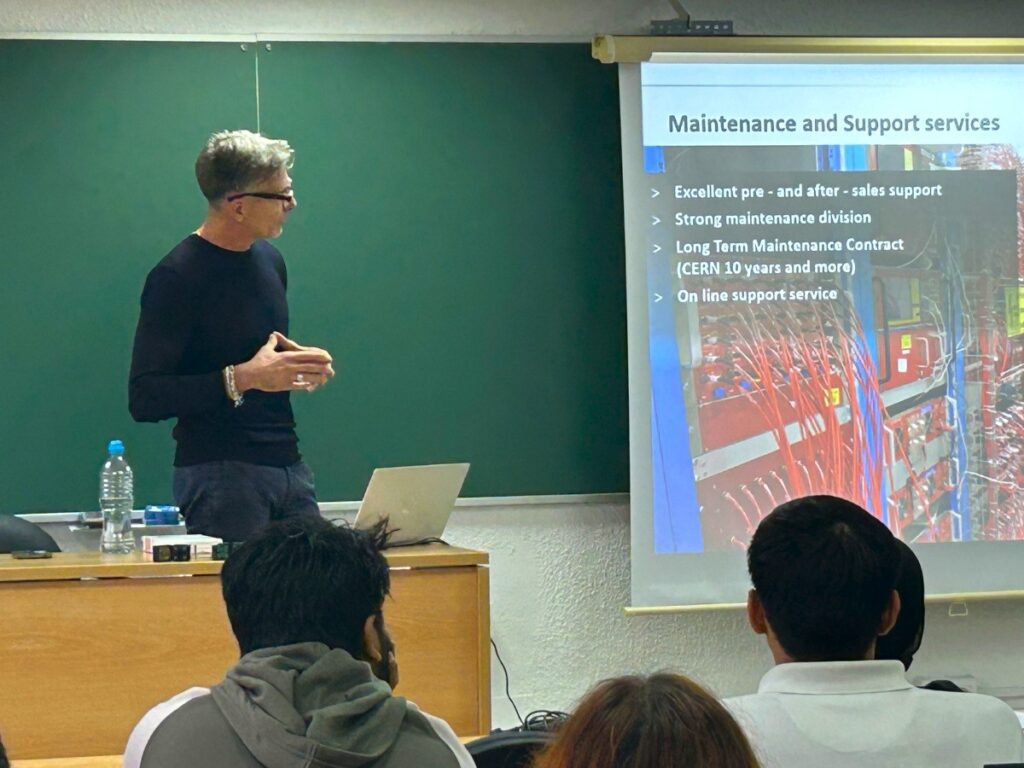
SiPMs have largely replaced photomultiplier tubes in scintillation-based radiation detection, calorimetry and particle tracking. They are compact, work at low bias voltage, are insensitive to magnetic fields and can resolve single photons. Using them well, however, means understanding both the sensor and its readout electronics, since in real systems the two cannot be designed independently.
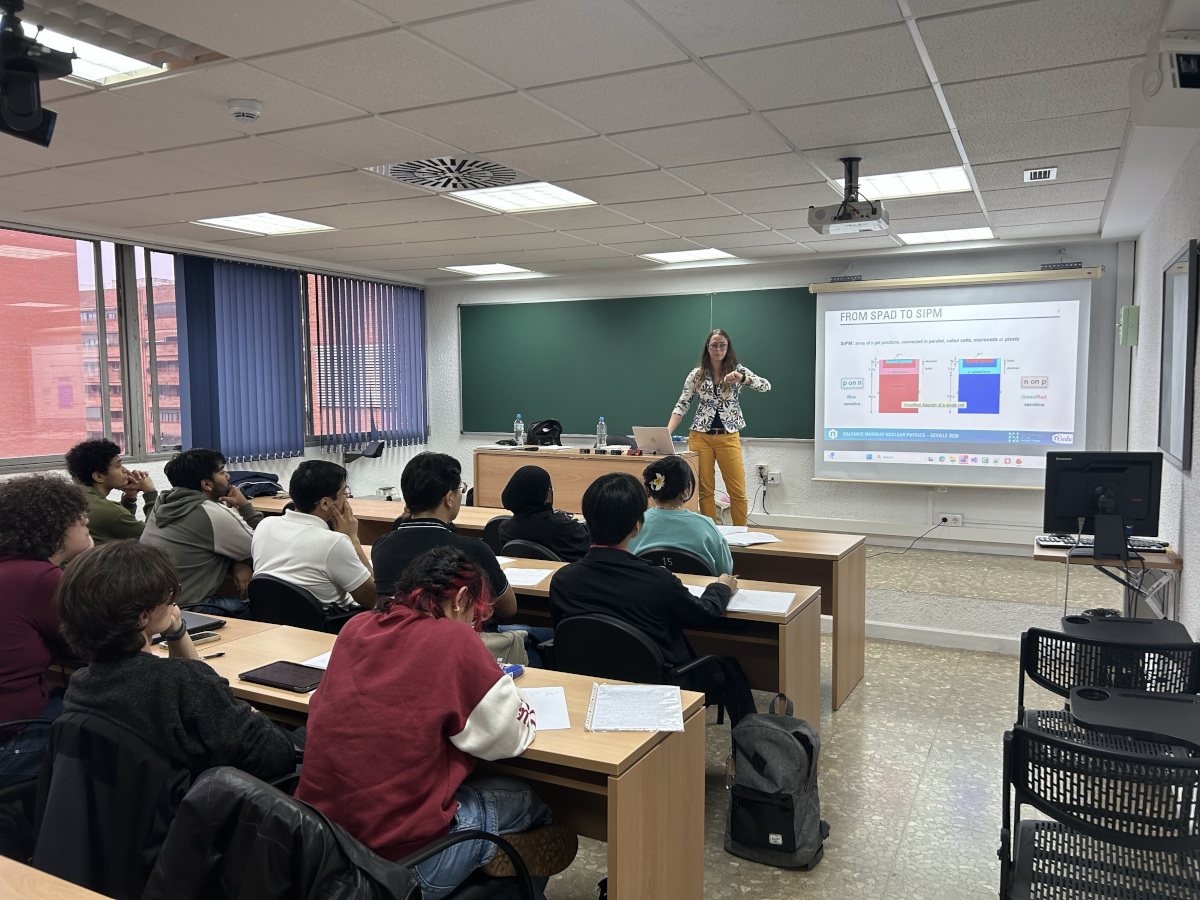
The seminar opened with the working principle of SiPMs and their key parameters. Students then looked at SiPMs used both on their own and coupled to a scintillator.
The second part addressed the readout. Two approaches were compared: waveform digitizers, which record the full pulse shape, and ASIC-based front-ends such as the CAEN FERS-5200 platform. By integrating multichannel charge and timing measurements, per-channel bias adjustment and data acquisition in a single compact unit, FERS makes SiPM readout affordable and scalable, from a single sensor up to the very large channel counts of modern experiments.
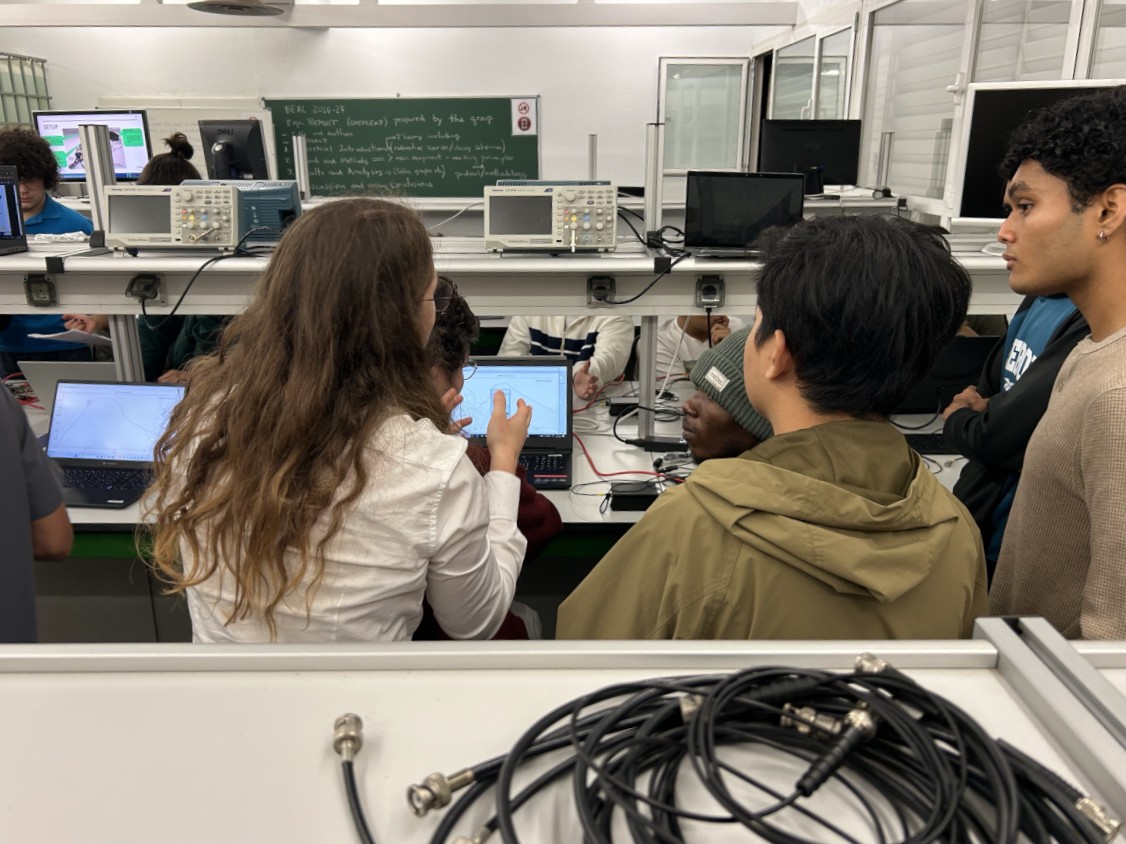
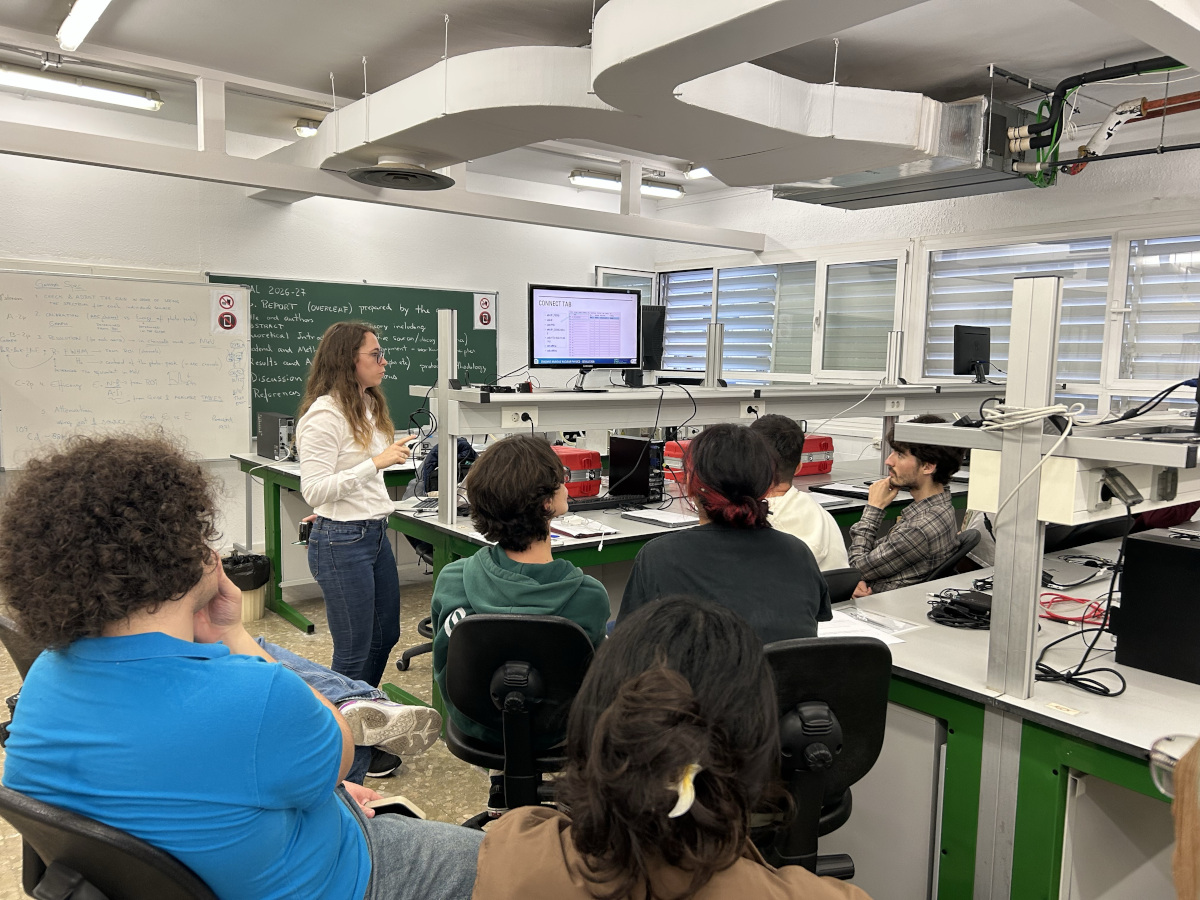
Theory was then put into practice. Working in groups with the Janus acquisition software, participants read out SiPMs with an A5202 unit. Using a pulsed LED driver, they studied the sensor response from single-photon spectra to dark counts, crosstalk and the breakdown voltage.
As in previous editions, the visit was a rewarding experience for everyone involved. The curiosity of the international Erasmus Mundus students, the commitment of the CAEN team and the hospitality of the University of Seville once again made this one of the highlights of CAEN’s educational activities.
CAEN looks forward to continuing this partnership and supporting the training of the next generation of nuclear physicists with the tools, expertise and technologies used in today’s experiments.