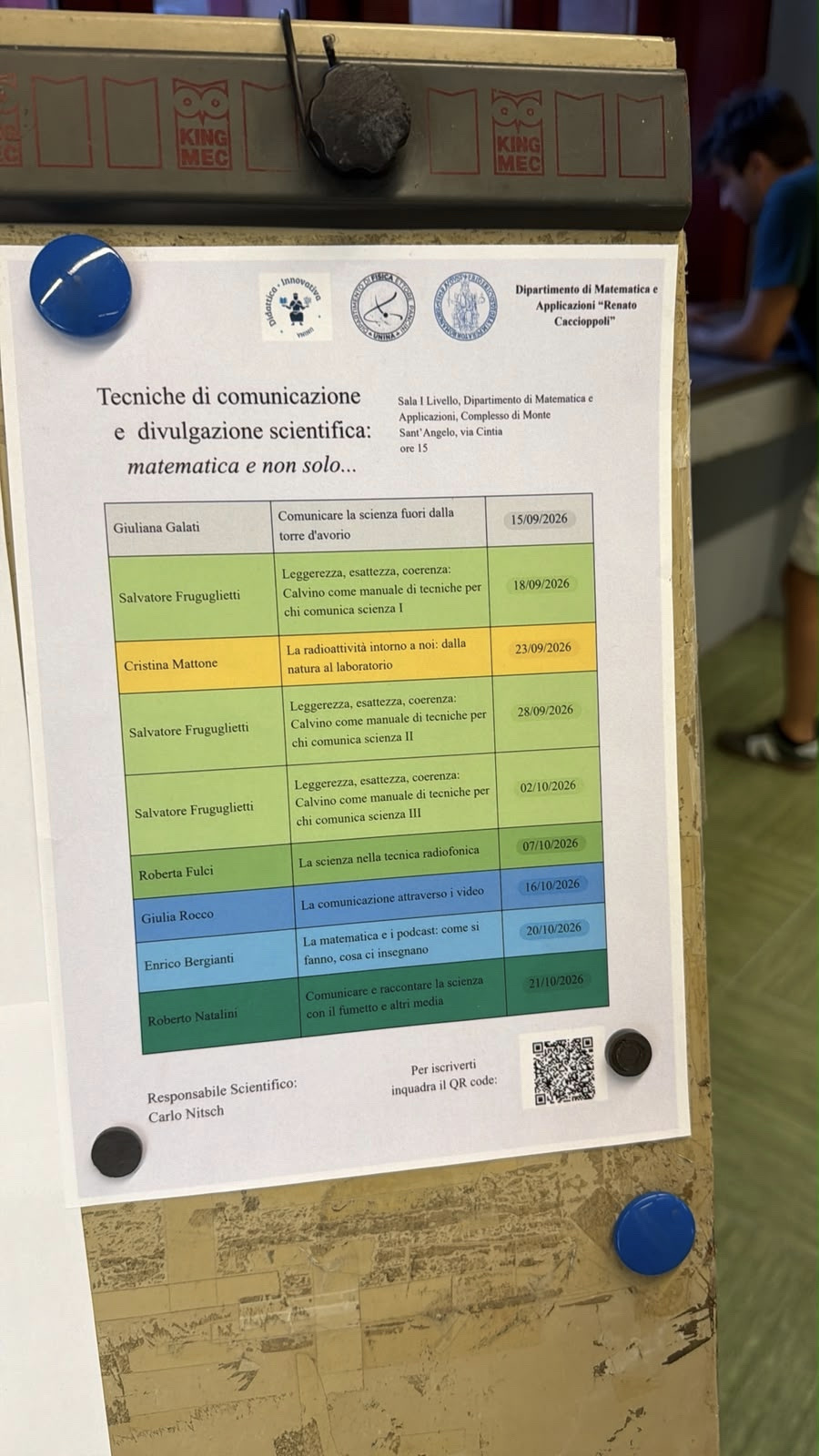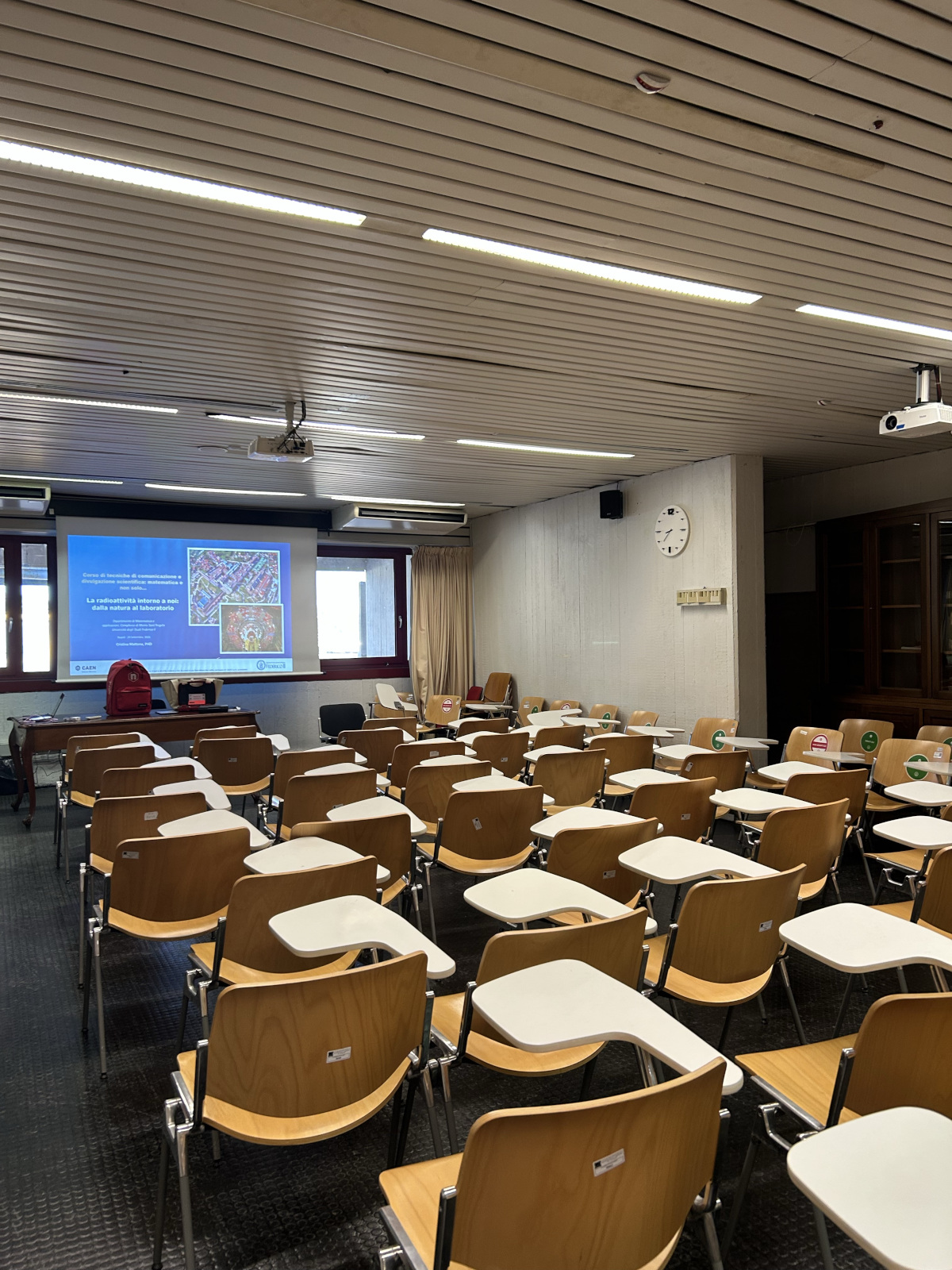
On September 23rd, 2026, CAEN joined the course “Techniques of Science Communication and Outreach: Mathematics and Beyond“, held at the University of Naples Federico II within its faculty development program on innovative teaching methodologies.
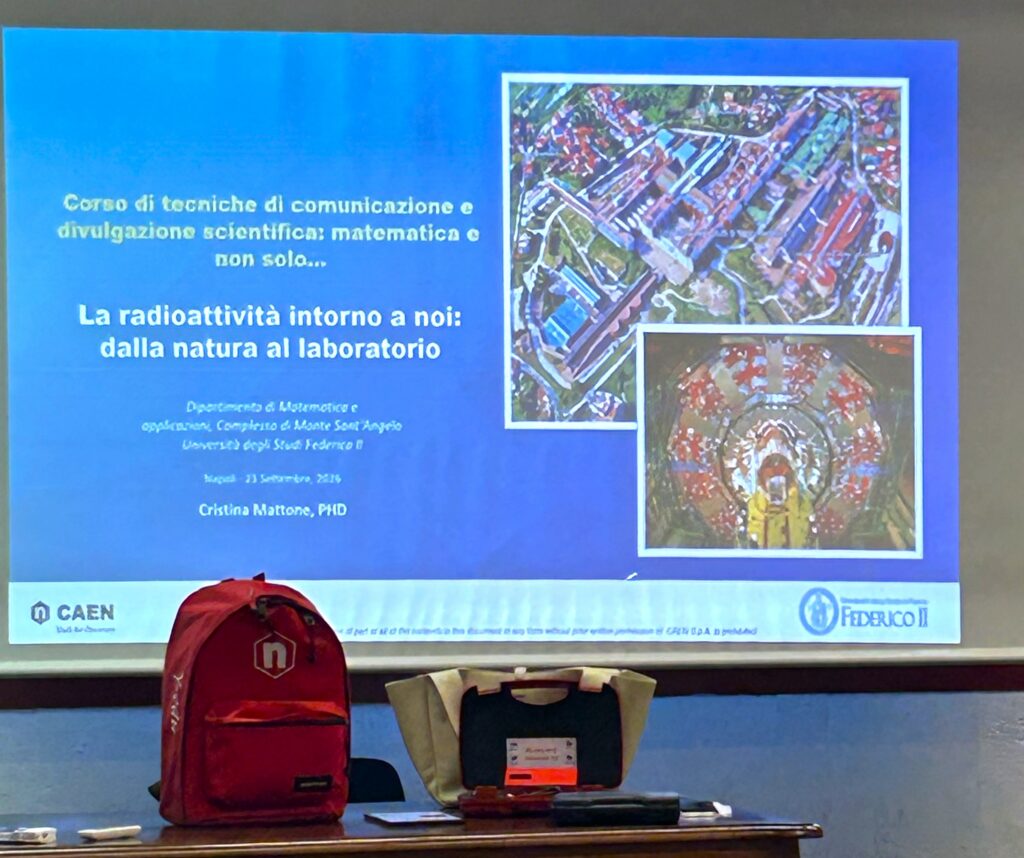
During the event, Cristina Mattone, Ph.D., Educational Product Manager at CAEN, presented the seminar “Radioactivity Around Us: From Nature to the Laboratory”, which addressed a question every science communicator eventually faces: how can physics be explained in a simple, clear and engaging way while remaining scientifically rigorous?
The talk began with the fundamentals of effective science communication, starting from the audience rather than the content. The discussion covered how to choose the right language for each audience, how to work with examples and analogies, how to build a story around a question, and how to recognize oversimplifications that risk being misleading.
Radioactivity offered a practical ground for putting these ideas to work. Questions that seem straightforward, like Is radioactivity dangerous?, Are we radioactive? or How do we know a rock emits radiation?, became the starting point of a path leading the audience from curiosity to real understanding. Step by step, the seminar moved from observing the phenomenon to measuring it, introducing radioactive decay, activity and half-life in an intuitive way.
A key part of the seminar focused on the value of practical experiments and real data in communication. When an invisible phenomenon becomes observable, and the audience can formulate a hypothesis, take a measurement and interpret the result, an abstract concept turns into a hands-on experience. This is the same approach that guides CAEN Educational’s activities with schools and universities.
Although built around natural radioactivity, the strategies discussed apply to many other fields of physics. The seminar showed how a simple question, well chosen, can open the way to deeper scientific concepts.
CAEN would like to thank the University of Naples Federico II for the invitation and all participants for their interest and active contribution.