γ-Spectroscopy Experiments
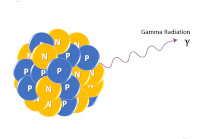
The study of gamma radiation is one of the fundamental topics of nuclear physics and radiation detection. Gamma rays are high-energy photons emitted during the de-excitation of unstable atomic nuclei, often following radioactive decay processes. Their interaction with matter provides valuable information about both the properties of the radiation itself and the characteristics of the materials through which it passes.
The experiments presented in this section introduce the principles of gamma-ray spectroscopy through a series of hands-on laboratory activities. Students will investigate the mechanisms of gamma-ray interaction with matter, become familiar with the operation and calibration of radiation detectors, and learn how to acquire and analyze energy spectra. These experiments provide a solid foundation for understanding both the physical principles of nuclear radiation and the techniques employed in modern radiation measurements.
Gamma-ray spectroscopy is widely used in many scientific and technological fields, including nuclear physics, medical imaging, environmental monitoring, industrial inspection, archaeometry, and homeland security.
The experiments described in this section can be performed using different educational setups, including the Educational Gamma and Premium kits, the Emulation Kit, the Environmental and Environmental Plus kits, the GammaEDU Backpack, and the Open FPGA Kit.

 |
|
||||||
|---|---|---|---|---|---|---|---|
| SP5600C | SP5600AN | SP5600EMU | SP5630EN | SP5640 | SP5630ENP | SP5650 | |
| SG6111A – Detecting γ-Radiation (related experiments: SG6111C, SG6111E) | ✔ | ✔ | ✔ | ✔ | ✔ | ✔ | |
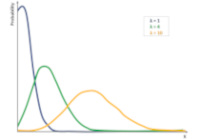
| SG6112A – Poisson and Gaussian Distributions (related experiments: SG6112B, SG6112C) | ✔ | ✔ | ✔ | ✔ | ✔ | ✔ | ✔ |
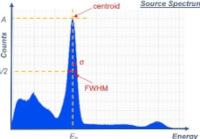
| SG6113A – Energy Resolution (related experiments: SG6113C, SG6113E) | ✔ | ✔ | ✔ | ✔ | ✔ | ✔ | ✔ |
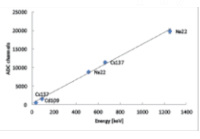
| SG6114A – System Calibration: Linearity and Resolution (related experiments: SG6114B, SG6114C, SG6114E) | ✔ | ✔ | ✔ | ✔ | ✔ | ✔ | ✔ |
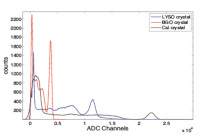
| SG6115A – A comparison of different scintillating crystals: Light Yield | ✔ | ✔ |
|
✔ | ✔ | ✔ | |
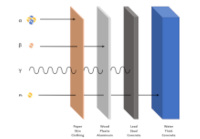
| SG6116A – γ-Radiation Absorption (related experiment: SG6116E) | ✔ | ✔ | ✔ | ✔ | ✔ | ✔ | |
| SG6117A – Photonuclear cross-section/Compton Scattering cross-section (related experiments: SG6117B, SG6117C, SG6117E) | ✔ | ✔ | ✔ | ✔ | ✔ | ✔ | ✔ |
| SG6118B – Study of the 137Cs spectrum: the backscatter peak and X rays (related experiments: SG6118E) | ✔ | ✔ | ✔ | ✔ | ✔ | ✔ | ✔ |
| SG6119B – Activity of the60Co (related experiments: SG6119E) | ✔ | ✔ | ✔ | ✔ | ✔ | ✔ | ✔ |
Note: The star indicates the recommended Kits while the yellow color highlights the Kits especially dedicated to the experiences of this Section. If you are also interested in other experiences, the PREMIUM Kit is recommended.