β-Spectroscopy Experiments
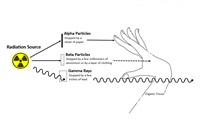
Following the discovery of radioactivity, E. Rutherford classified radioactive emissions into different types based on their interaction with matter and ionization properties. Among them, beta radiation is characterized by higher penetration capability and lower specific ionization compared with alpha radiation.
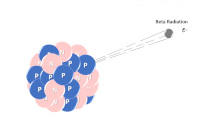
Beta particles are electrons (β⁻) or positrons (β⁺) emitted during the decay of unstable atomic nuclei. Unlike alpha and gamma decays, beta decay is a three-body process involving the emitted particle, the recoiling nucleus, and a neutrino or antineutrino. As a consequence, beta particles are emitted with a continuous energy spectrum, a feature that provides important information about the underlying nuclear decay mechanism.
The experiments presented in this section introduce students to the principles of beta spectroscopy, allowing them to measure and analyze beta energy distributions and understand the fundamental concepts of nuclear decay and radiation detection.
The beta spectroscopy experiments can be performed using the Educational Beta Kit or, alternatively, the Premium Kit.

 |
|
|
|---|---|---|
| SP5600D | SP5600AN | |
| SG6121 – Response of a Plastic Scintillating Tile | ✔ | ✔ |
| SG6122 – β Spectroscopy | ✔ | ✔ |
| SG6123 – β Radiation: Transmission through Matter | ✔ | ✔ |
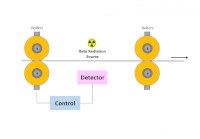
| SG6124 – β Radiation as a Method to Measure Paper Sheet Grammage and Thin Layer Thickness | ✔ | ✔ |
| SG6125A – Costing effect on the Light Collection | ✔ | ✔ |
The star indicates the recommended Kits while the yellow color highlights the Kits especially dedicated to the experiences of this Section. If you are also interested in other experiences, the PREMIUM Kit is recommended.