Silicon Photomultiplier (SiPM) Experiments
Silicon Photomultipliers (SiPMs) have become one of the most important photodetectors in modern scientific instrumentation. Their ability to detect single photons, combined with high gain, excellent photon-counting capability, compact dimensions, and low operating voltage, has made them the preferred choice for a wide range of applications in physics, medical imaging, nuclear instrumentation, and industrial sensing.
Before a photodetector can be effectively employed in experimental applications, its operating principles and performance characteristics must be thoroughly understood. For this reason, the experiments presented in this section are dedicated to the characterization of SiPM devices through a series of hands-on laboratory activities.
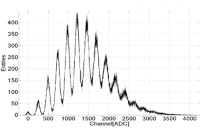
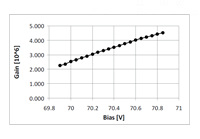
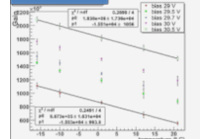
Students will investigate the fundamental operating parameters of SiPMs, including gain, breakdown voltage, dark count rate, photon detection performance, and the influence of operating conditions on detector behavior. Through these experiments, they will become familiar with the methods used to characterize solid-state photodetectors, acquiring practical skills in electronic measurements, data acquisition, and experimental data analysis.
These activities provide the essential foundation for the subsequent experimental sections of the handbook, where SiPM technology is employed as the core photosensor in increasingly advanced physics experiments and detection systems.

 |
|
|
|---|---|---|
| Silicon Photomultipliers (SiPM) | SP5600E | SP5600AN |
| SG6011 – SiMP Characterization | ✔ | ✔ |
| SG6012 – Dependence of the SiMP Properties on the Bias Voltage | ✔ | ✔ |
| SG6013 – Temperature Effects on SiMP Properties | ✔ | ✔ |
Note: The star indicates the recommended Kits while the yellow color highlights the Kits especially dedicated to the experiences of this Section. If you are also interested in other experiences, the PREMIUM Kit is recommended.